Incoterms Decoded: A Guide for Australian Importers and Exporters
 Azmi El-Ali
Incoterms decoded is your shortcut to shipping with confidence, trimming risk, and protecting profit when your goods move across borders. If you are importing into Australia from China, Europe, the USA, or anywhere in between, understanding who pays for what and who carries the risk at each step will save you headaches and hard cash. In this guide, we take incoterms decoded from jargon to plain English so you can choose the right trade terms and ship smarter with every order.
What are Incoterms and why should you care?
International Commercial Terms, or Incoterms, are globally recognised rules that divide responsibilities between buyer and seller. They define who handles freight, insurance, customs, and local delivery, as well as the precise point where risk transfers. With incoterms decoded you avoid disputes, missed expectations, and surprise fees. Choose the wrong term and you might be paying for services you never planned to, or worse, carrying risk while your goods are far from home.
The big picture in simple steps
To get incoterms decoded quickly, picture your shipment moving through five phases: factory pick up, export clearance, main carriage, import clearance, and final delivery. Each Incoterm sets who pays and who is responsible for each phase. The farther the seller’s obligation reaches, the more bundled your landed cost appears. The farther your obligation reaches, the more control you have over carriers, timing, and costs.
The most common Incoterms for Australian importers
Let us get incoterms decoded for the terms you will most likely see on quotes from overseas suppliers.
- EXW (Ex Works): You take responsibility from the seller’s door. You manage pick up, export clearance, and everything else. Great for maximum control, but only if you have a partner that can organise export formalities at origin.
- FOB (Free On Board): The seller clears export and loads the cargo on the vessel or plane. Risk transfers at loading. This is a favourite because it gives you control over the main freight leg and transparency on true costs.
- CIF or CIP (Cost, Insurance and Freight or Carriage and Insurance Paid To): The seller pays for freight and minimum insurance to the named port or airport. You still take risk after loading and you pay destination fees. Good for convenience, but watch out for expensive destination charges from the seller’s chosen carrier.
- DAP (Delivered At Place): The seller pays through to your door, excluding import customs and duties. You handle clearance and taxes. Useful when you want a door delivery quote without handing over customs control.
- DDP (Delivered Duty Paid): The seller covers almost everything including import clearance and duties. Sounds simple, but can delay clearance if your Australian importer details or licences are not used. Use with caution.
Incoterms for Australian Exporters
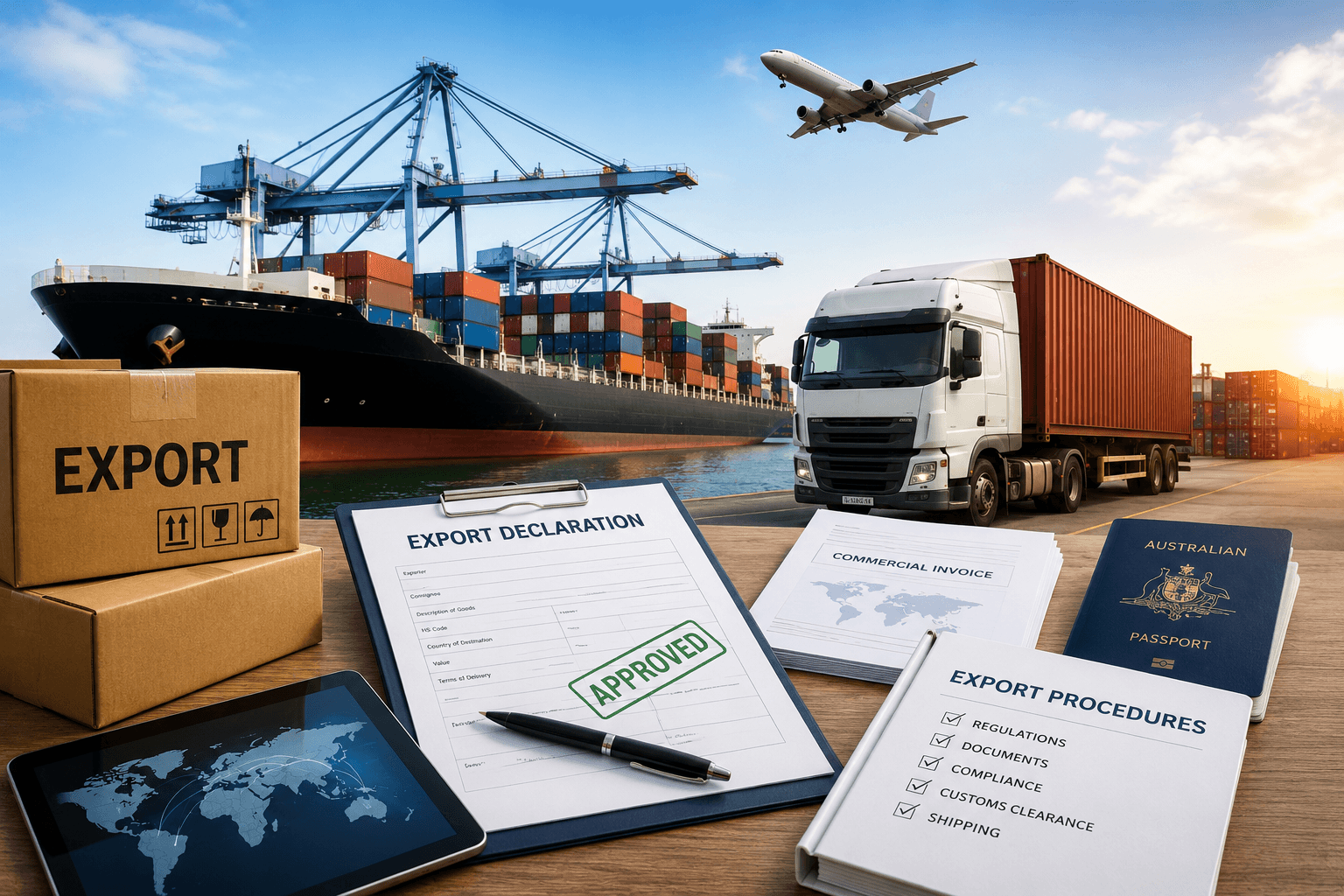
Incoterms decoded isn’t only for importers. If you’re shipping goods out of Australia, the same rules decide how much of the journey you’re responsible for and exactly where your risk ends. Getting this right protects your margin and keeps your buyer relationship on solid footing.
- EXW (Ex Works): You hand goods over at your own premises and your buyer arranges everything from there, including export clearance from Australia. This is the least responsibility for you, but many buyers prefer a term where you handle local export formalities, since you know the process better than they do.
- FOB (Free On Board): The most common choice for Australian exporters shipping by sea. You arrange export clearance and deliver the goods on board the vessel; risk and cost transfer to your buyer once loading is complete. This keeps your obligations clear and your pricing simple to quote.
- FCA (Free Carrier): The air freight and containerised cargo equivalent of FOB. You clear the goods for export and hand them to your buyer’s nominated carrier at an agreed point.
- CIF or CIP: You arrange and pay for freight, and minimum insurance under CIF, to the destination port or airport, but risk still transfers once goods are loaded at origin. This can help win price-sensitive buyers, but means quoting and managing international freight yourself.
- DAP or DDP: You take responsibility all the way to your buyer’s door, and under DDP you also handle import duties and taxes in their country. This suits buyers who want a landed price, but exposes you to destination customs rules you may not be familiar with.
Whatever term you choose, name the exact place precisely; FOB Sydney and FOB Fremantle carry different costs. Make sure your export documentation, including your commercial invoice, packing list, Certificate of Origin, and any permits, matches the obligations that come with it.
How the right partner reduces risk
Even with incoterms decoded many importers run into trouble at critical handover points. That is where a hands on freight forwarder and licensed customs broker make a real difference. With a single contact coordinating sea freight FCL or LCL, air freight for urgent shipments, customs and quarantine clearance, and local trucking to final delivery, you cut the back and forth and keep your cargo flowing.
Comparing true landed cost
Numbers matter. Here is a practical way to use incoterms decoded for better budgeting.
- Ask your supplier for two quotes: one on FOB and one on CIF or CIP.
- Request a destination charges estimate from your Australian forwarder for the CIF or CIP option.
- Build a landed cost worksheet that includes origin fees, main freight, insurance, destination terminal fees, customs, quarantine, duties and GST, and final delivery.
- Check your risk transfer point so you know when insurance should kick in and when your team must react.
Most SMEs find that FOB plus locally arranged freight offers the best blend of control, visibility, and value. Your forwarder can negotiate space with trusted carriers, provide daily tracking, and manage clearance proactively to dodge storage and demurrage.
Incoterms and Australian biosecurity
Australia’s biosecurity standards are strict and rightly so. With incoterms decoded you will see that no matter which term you select, you remain responsible for meeting Australian Border Force and Department of Agriculture requirements once the shipment lands. That includes correct tariff classification, permits, inspections, and treatments such as fumigation where required. Working with a customs broker that stays current with legislation and documentation can prevent penalties and delays.
First time importer checklist
This quick checklist brings incoterms decoded to life for newcomers.
- Pick the right Incoterm early: put it on the purchase order and pro forma invoice.
- Name the place precisely: for example, FOB Ningbo, CIF Sydney, DAP Melbourne Warehouse.
- Align insurance with risk transfer: do not assume the seller’s cover is enough.
- Confirm packaging and compliance: pallets, dangerous goods, and quarantine treatments as needed.
- Book with a partner who manages end to end: sea or air, customs and quarantine clearance, and last mile delivery.
Avoiding common traps
Even with incoterms decoded importers get caught by a few repeat issues.
- Hidden destination charges under CIF or CIP: the seller’s carrier may levy premium fees on arrival. Ask for a destination fee schedule before you agree.
- Using DDP without local representation: customs clearance done under the seller’s details can create tax and compliance problems. Prefer DAP with your broker handling clearance.
- Vague place names: DAP Sydney is not the same as DAP Your Factory In Wetherill Park. Always specify the exact delivery location.
- No handover documents: commercial invoice, packing list, and bill of lading or airway bill must be correct and transmitted on time to avoid storage.
Sea freight or air freight with the right Incoterm
Once you have incoterms decoded consider how mode choice changes your timeline and cash flow. Sea freight FCL suits full loads and bulky cargo with predictable schedules. LCL helps smaller consignments move cost effectively. Air freight is your best friend for urgent, high value, or launch critical goods. A forwarder that works directly with shipping lines and airlines can secure sharp rates and space, then tie it together with daily tracking, proactive updates on arrival, and fast turnarounds at customs and quarantine.
Real world scenario
You are importing gym equipment from China. Your supplier proposes CIF Sydney. With incoterms decoded you ask for FOB Shanghai instead. Your Australian forwarder quotes main carriage, insurance that matches your true risk, and provides a clear breakdown of terminal handling, unpack, customs, quarantine inspection if needed, and delivery to your warehouse. You gain visibility, avoid inflated arrival fees, and keep control of timing for your pre sale campaign. For a scaling business this is the difference between margin erosion and a smooth launch.
Which Incoterm should you choose?
- If you want maximum control and transparency: choose FOB and appoint your own forwarder and customs broker.
- If you value convenience but still want to manage customs and delivery: choose DAP to your site with your broker handling clearance.
- If you are very experienced and have ironclad arrangements with your supplier: you may consider CIF or CIP, but only after confirming destination fees in writing.
Whatever you choose, apply incoterms decoded thinking to document everything, name locations precisely, and keep responsibilities crystal clear.
How Synergy Freight Management helps
You do not need to learn every clause to benefit from incoterms decoded in practice. Partner with a Sydney based team that lives and breathes international freight. Expect hands on coordination of FCL and LCL sea freight, fast air freight solutions, licensed customs and quarantine clearance, and organised local transport to the final destination. That means fewer suppliers to juggle, clearer communication, and less chance of costly surprises. If you are a first time importer, you will get step by step guidance. If you import regularly, you will get consistent execution and proactive updates that keep your supply chain moving.
Ready to act?
With incoterms decoded you can brief your supplier clearly, select the right term confidently, and align your insurance, customs, and delivery plan from day one. Lock in your next shipment with support that covers the lot, from origin pick up to delivery at your door.
Got a shipment coming up?
Contact Synergy Freight Management for tailored advice, a sharp quote, and end to end execution that protects your time and margin.
Related Services
Share this article
Azmi El-Ali
Managing Director, Synergy Freight Management
Azmi El-Ali is a Licensed Australian Customs Broker under the Customs Act 1901 with 10+ years experience in international freight forwarding. As Managing Director of Synergy Freight Management, Azmi helps businesses import and export goods with confidence.
Connect on LinkedIn