All ServicesOur Services
Sea Freight Forwarding
Are you experiencing high premiums for Australian based Sea Freight forwarding?
Licensed & Compliant
Fully licensed Australian customs broker with deep regulatory knowledge.
Fast Turnaround
Streamlined processes that minimise delays and keep your supply chain moving.
Transparent Pricing
No hidden fees. Competitive rates with complete visibility on all charges.
What Is Sea Freight Forwarding?
Sea freight forwarding is the coordination of ocean-based cargo shipments between suppliers and buyers — managing everything from booking vessel space to customs clearance at the destination port. For Australian importers and exporters, sea freight is the most cost-effective method for moving large or heavy consignments, with the vast majority of Australia’s trade by volume handled by sea.
Synergy Freight Management arranges sea freight on your behalf across all major global trade lanes, handling documentation, carrier negotiations, port logistics, and Australian Border Force compliance so you can focus on your business.
Already know whether you need a dedicated container or a shared one? Go straight to our Full Container Load (FCL) or Less than Container Load (LCL) page for the full detail. This page covers sea freight as a whole — how to choose between FCL, LCL, and specialised options like reefer, break bulk, and Ro-Ro, plus the trade lanes, costs, and compliance steps that apply across all of them.
Sea Freight Options We Arrange
We source the right shipping solution for your cargo size and trade lane:
- Full Container Load (FCL): Your goods fill a dedicated 20ft or 40ft container. Ideal for larger volumes (typically 15 CBM+) — faster transit, lower per-unit cost, and reduced handling risk compared to shared containers.
- Less than Container Load (LCL): Your goods share container space with other importers’ cargo. Cost-effective for smaller shipments (1–14 CBM) where paying for a full container isn’t justified.
- Refrigerated (Reefer) Containers: Temperature-controlled containers for perishable goods, food products, pharmaceuticals, and other temperature-sensitive cargo.
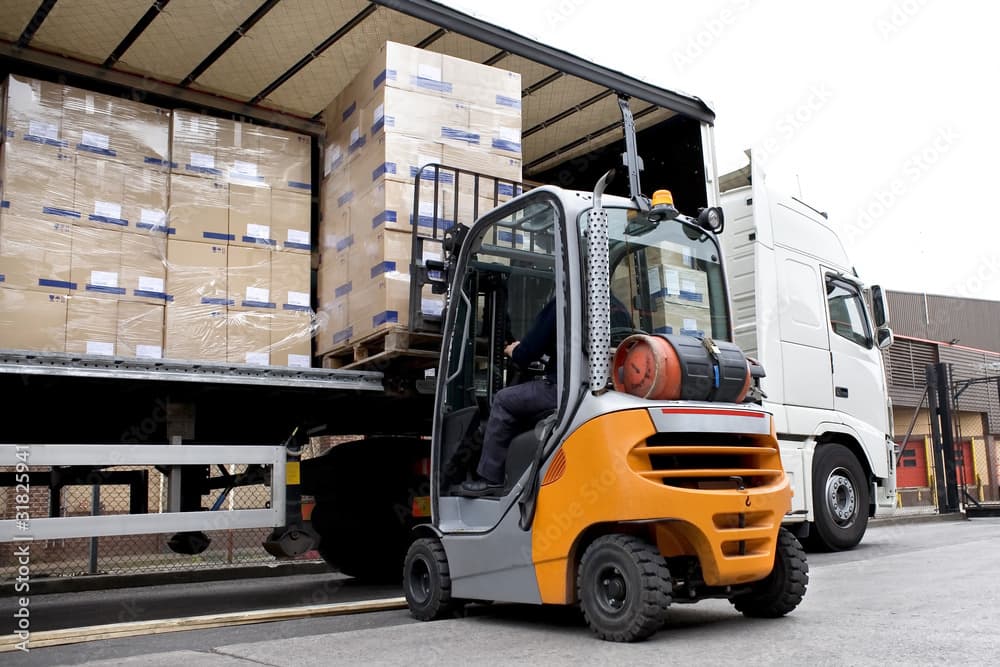
- Out-of-Gauge / Break Bulk: For cargo that doesn’t fit standard containers — machinery, vehicles, structural steel, or oversized equipment. Arranged via flat-rack, open-top, or break-bulk vessel booking. Synergy Freight Management will also handle the collection, trucking, and movement to the port from your supplier.
- Roll-on/Roll-off (Ro-Ro): Purpose-built vessels for wheeled cargo — cars, trucks, heavy equipment, and agricultural machinery.
Sea Freight Transit Times by Origin Country
Ocean transit time depends on the origin port, routing (direct or transhipment), and destination Australian port. The table below shows typical port-to-port transit for the five origins we ship from most often, based on a standard FCL booking. Actual sailing schedules vary by carrier and season — contact us for a schedule specific to your route.
| Origin | Major Ports | Typical Transit to Sydney/Melbourne |
|---|---|---|
| China | Shanghai, Ningbo, Shenzhen, Qingdao | 14–28 days (up to 30 days to Fremantle) |
| Vietnam | Ho Chi Minh City, Haiphong | 12–20 days |
| India | Nhava Sheva, Chennai, Mundra | 18–25 days |
| United States | Los Angeles, Long Beach | 20–28 days |
| United Kingdom | Felixstowe, Southampton | 30–40 days |
These figures are for FCL shipments. LCL shipments generally add 5–10 days on top of the above to allow for consolidation at origin and deconsolidation on arrival in Australia — see our FCL and LCL pages for a full breakdown of how each option affects your timeline.
Two seasonal factors are worth planning around regardless of origin. Between 1 September and 30 April, shipments from countries listed as Brown Marmorated Stink Bug (BMSB) risk origins — including China, the United States, and much of Europe — are subject to mandatory offshore treatment or onshore inspection, which can add several days if a container isn’t correctly treated before departure. Separately, the run-up to Christmas (roughly August to October) and the weeks around Chinese New Year see reduced vessel space and higher demand across all Asian trade lanes — booking several weeks ahead of these windows helps avoid rolled sailings and rate spikes.
How the Sea Freight Process Works
- Quote and booking: We assess your cargo details (CBM, weight, commodity, origin, destination, Incoterms) and source competitive ocean freight rates from our carrier network. Once approved, we issue a booking confirmation and shipping instructions to your supplier.
- Origin handling: Synergy Freight Management works with our overseas freight partner network to handle and arrange your goods according to the terms agreed with your supplier, whether it is FOB, EXW, CFR, or door-to-door. Either way, Synergy Freight Management will handle the logistics on your behalf.When required, origin handling involves:
- LCL (Less than Container Load): Collecting cargo from your supplier and moving it into a Container Freight Station (CFS) for consolidation into a shared container with other importers’ cargo.
- FCL (Full Container Load): Arranging an empty container to be delivered to your supplier’s warehouse for loading. Once complete, we arrange pick-up of the full container and movement to the port for its scheduled export booking to Australia.
- Multi-supplier consolidation: Synergy Freight Management can handle the consolidation of goods from multiple suppliers into a single container — either at your supplier’s warehouse or at our designated consolidation warehouse.
- Additional origin services: Synergy Freight Management also handles any trucking, fumigation, and documentation required to meet Australian importing requirements for your goods.
- Export customs: Where required (particularly for controlled or regulated exports), we arrange export customs lodgement at origin and any customs or quarantine inspection, including but not limited to fumigation treatments, in coordination with our overseas agent network.
- Ocean transit: Your shipment sails on scheduled liner services. We monitor vessel ETAs and advise you of any sailing delays, port congestion, or transhipment changes that may affect your delivery window.
- Pre-arrival preparation: Before the vessel arrives, we prepare your Australian customs entry, arrange duty and tax payment, and lodge biosecurity (BICON) declarations where required.
- Australian customs clearance: We lodge the import declaration with Australian Border Force on your behalf, manage any examinations or queries, and obtain release of cargo from the waterfront.
- Delivery: Once released, we coordinate cartage from the wharf or CFS to your door — warehouse, distribution centre, or residential address.
How Much Does Sea Freight Cost?
Sea freight is priced differently depending on whether you book FCL or LCL:
- FCL: Priced per container (20ft or 40ft) regardless of how full it is — cost-effective once your volume approaches or exceeds around 15 CBM, since you’re paying a flat rate rather than a per-CBM charge.
- LCL: Priced on the greater of your cargo’s actual cubic measurement (CBM) or its weight-based equivalent (typically 1 CBM is treated as roughly 1,000 kg for rating purposes) — so dense, heavy cargo may be charged on weight rather than volume.
As a worked example: ten cartons each measuring 60 × 40 × 40 cm have a combined volume of (0.6 × 0.4 × 0.4) × 10 = 0.96 CBM — call it 1 CBM. If those same ten cartons weigh a combined 800 kg, the weight equivalent (800 kg ÷ 1,000) is 0.8 CBM — lower than the actual 1 CBM, so you’d be charged on the greater figure, 1 CBM. Dense cargo like books, machinery parts, or tiles will more often be charged on weight; bulky, lightweight cargo like furniture or homewares is almost always charged on volume.
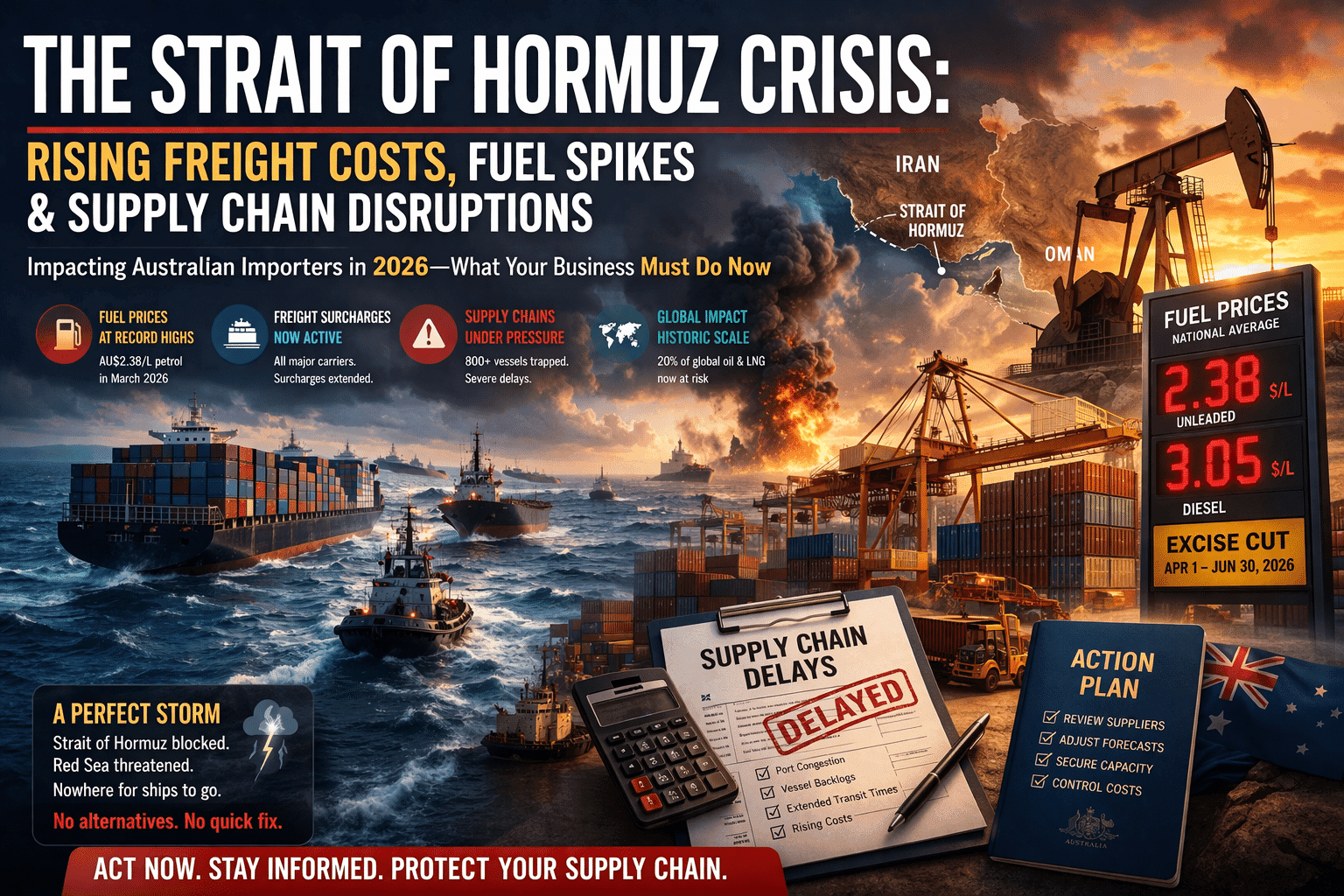
Because ocean freight rates move with vessel capacity, fuel prices, and seasonal demand — and can shift significantly during global shipping disruptions — we don’t publish fixed rates here. As a general pattern, though, cost per CBM falls as shipment size increases, similar to air freight: small LCL shipments carry the highest cost per CBM, while volumes approaching a full container reach the point where FCL becomes more economical overall.
Beyond the base ocean freight rate, expect these common surcharges on both FCL and LCL bookings:
- Bunker Adjustment Factor (BAF): A fuel cost surcharge applied on top of base freight, varying by carrier, route, and current fuel price index.
- Terminal Handling Charge (THC): Applied at both origin and destination ports to cover loading, unloading, and port equipment.
- Currency Adjustment Factor (CAF): Covers foreign exchange fluctuations, common on EUR and USD origin lanes.
- Low Sulphur Surcharge (LSS): Carriers pass on the cost of compliant low-sulphur bunker fuel required under the MARPOL Convention.
- BMSB season surcharge: Additional handling and treatment fees applied between 1 September and 30 April on shipments from listed high-risk countries.
- Demurrage and detention: Charges that apply if a container isn’t collected or returned within the carrier’s free-time window — Synergy actively monitors these to avoid unnecessary fees.
We provide a full landed-cost breakdown before you book — ocean freight, surcharges, customs duties, GST, and cartage all itemised — so there are no surprises at destination. See our FCL page for a detailed breakdown of container-specific surcharges.
Who is responsible for which cost also depends on your agreed Incoterms. Under EXW, you’re responsible for the full chain from your supplier’s door to Australian delivery — Synergy manages this on your behalf. Under FOB, your supplier delivers to the origin port and we take over from there, which is the most common arrangement we see. Under DDP, your supplier’s forwarder handles the shipment through to Australian delivery, including duties — we recommend confirming upfront who is lodging the Australian customs entry, since this affects how quickly your cargo clears the wharf.
What Can You Ship by Sea Freight? Commodity Guidance
Sea freight handles a far wider range of cargo types than air freight, from small consolidated cartons to entire industrial plants. Common categories we manage:
| Commodity Type | Typical Booking | Key Considerations |
|---|---|---|
| Furniture, homewares & décor | LCL or FCL depending on volume | Bulky, low-density cargo — often reaches FCL economics at a lower CBM threshold than dense cargo |
| Apparel, footwear & textiles | LCL (smaller orders) or FCL (bulk stock) | Frequently shipped via multi-supplier consolidation to combine several factories into one container |
| Machinery & industrial equipment | FCL, open-top, or flat-rack | Oversized or heavy items may require break bulk booking; check crating and lashing requirements |
| Food & perishables | Reefer FCL | Requires an unbroken cold chain and biosecurity import permits for most food categories |
| Vehicles & heavy equipment | RoRo or flat-rack FCL | Subject to specific DAFF cleaning and biosecurity standards before Australian entry |
| Building materials | FCL | Dense cargo often reaches container weight limits before volume limits |
| Chemicals & dangerous goods | FCL only | Must comply with IMDG Code documentation, packaging, and container placarding |
| Timber & wood products | FCL or LCL | Subject to biosecurity treatment and permit requirements in addition to standard ISPM 15 packaging rules |
Not sure which booking type suits your cargo? Our team can review your commodity, volume, and weight and recommend the most cost-effective option before you commit to a shipment.
FCL vs LCL: Choosing the Right Option
The two most common sea freight bookings — Full Container Load and Less than Container Load — suit different volumes and priorities:
| FCL | LCL | |
|---|---|---|
| Best for | Volumes above ~15 CBM, regular shipments, high-value or fragile cargo | Volumes under ~15 CBM, smaller or occasional orders |
| Pricing basis | Flat rate per container | Per CBM (or weight equivalent, whichever is greater) |
| Relative transit time | Faster — no consolidation/deconsolidation delay | 5–10 days slower than equivalent FCL |
| Handling risk | Lower — sealed at origin, not opened until it reaches you | Higher — cargo is handled multiple times during consolidation and deconsolidation |
| Flexibility | Requires enough volume to justify a full container | Lets you order smaller quantities more frequently |
Read our full FCL and LCL service pages for detailed guidance, or contact us and we’ll compare both options for your specific shipment.
Key Trade Lanes We Service
Synergy Freight Management has established relationships with carriers and origin agents across all major sea freight corridors into and out of Australia. The regions below represent our core coverage — we are not limited to these ports or countries, and regularly handle shipments from origins across the globe.
- China and Greater China: All major manufacturing and export hubs across mainland China, including Shanghai, Shenzhen, Guangzhou, Ningbo, Tianjin, Qingdao, Xiamen, Yiwu, and beyond — whether your supplier is in a major port city or an inland province, we can arrange collection and export.
- East and Southeast Asia: Hong Kong, Busan, Ho Chi Minh City, Bangkok, Jakarta, Singapore, Kuala Lumpur, Manila, and all surrounding countries and ports throughout the region.
- Indian Subcontinent: Mumbai, Chennai, Nhava Sheva, Colombo, Dhaka, Karachi, and across India, Sri Lanka, Bangladesh, and Pakistan.
- Middle East and North Africa: Dubai (Jebel Ali), Dammam, Al Khobar, Kuwait, Qatar, Beirut, Baghdad, as well as Egypt, Morocco, and ports across North Africa. We regularly handle shipments from across the broader Middle East region beyond the major hubs.
- Africa: Including West Africa — Guinea, Ghana, and surrounding nations — as well as East and Southern Africa. Contact us for coverage specific to your origin.
- Europe: Felixstowe, Rotterdam, Hamburg, Antwerp, Genoa, Barcelona, and all major European ports and inland origins.
- North America: Los Angeles, Long Beach, New York, Vancouver, and across Canada and the United States.
- South America: Key ports including Santos, Buenos Aires, Callao, and surrounding South American origins.
- Australia exports: Sydney, Melbourne, Brisbane, Fremantle, Adelaide — outbound to all global markets.
If your origin is not listed above, contact us — our global agent network means we can source competitive rates and reliable handling from virtually any port worldwide.
What’s Included in Our Sea Freight Service
- Ocean freight rate sourcing and carrier booking
- Coordination with origin suppliers and overseas agents
- Shipping instruction issuance and Bill of Lading management
- Australian import declaration and customs clearance
- Duty, GST, and import cost calculation
- BICON biosecurity assessment and permit coordination
- Port and terminal handling coordination
- Wharf cartage to your delivery address
- Cargo insurance arrangement (on request)
- Full track-and-trace with milestone status updates
Documentation Required for Sea Freight Imports
To clear sea freight cargo through Australian Border Force, the following documents are typically required:
- Commercial Invoice: Buyer and seller details, goods description, date of invoice, HS tariff codes, quantities, unit prices, currency, and terms of the shipment (e.g. FOB, EXW, CFR).
- Packing List: Carton-level breakdown of contents, dimensions, and gross/net weights.
- Bill of Lading or Sea Waybill: The carrier’s document of title, required to take delivery from the shipping line.
- Packing Declaration (ISPM 15): Required for all shipments using solid wood packaging material — pallets, crates, or dunnage. This is a declaration that covers the packaging material used to ship the goods for quarantine purposes.
- Certificate of Origin: Required to claim preferential tariff rates under Australia’s Free Trade Agreements (e.g., ChAFTA, AUSFTA, CPTPP).
- Import Permits: Required for regulated goods — food, biosecurity-risk items, therapeutic goods, chemicals, and certain electronics.
Synergy Freight Management will advise you on exactly which documents are needed before your shipment departs origin.
Why Choose Synergy Freight Management for Sea Freight?
As a licensed Australian customs broker and freight forwarder, Synergy Freight Management combines regulatory expertise with strong carrier relationships to deliver sea freight solutions that are competitive on cost and reliable in execution.
- Licensed customs broker: We handle Australian Border Force compliance in-house — no third-party customs agents, no hand-off delays.
- Carrier-neutral: We access rates across multiple shipping lines and select the best combination of price, transit time, and reliability for your lane.
- Transparent pricing: Full landed-cost breakdown upfront — ocean freight, terminal handling, customs duties, GST, cartage — no surprise invoices at destination.
- Direct communication: You deal with our team directly, not a call centre. We know your account, your cargo history, and your preferences.
- End-to-end handling: From supplier pick-up at origin to final-mile delivery in Australia — one point of contact throughout.
- Proactive biosecurity compliance: BMSB seasonal treatment, BICON conditions, and packaging compliance are checked before your goods depart origin — not after they arrive and incur delay costs.
- Multi-supplier consolidation: If you buy from several factories, we can combine shipments into a single container to reduce your total freight cost.
Ready to move your next shipment? Request a sea freight quote or call us on +61 410 355 355.
Related Articles
Why Choose Us
Why Choose Us?
Synergy Freight Management is a freight forwarding, licensed customs brokerage and transport service provider, working with businesses and individuals who are looking to import and export their cargo.
At Synergy Freight Management we know that this process can be complicated, expensive and time-consuming, especially for entrepreneurs and businesses looking to get their products into the local market.
“We understand you prefer to receive or ship your products without the hassle of managing the freight process. We're your freight partners. Your success defines our own.”
— Azmi El-Ali, Managing Director
Licensed Australian Customs Broker
Competitive & transparent pricing
Dedicated account manager for your business
Real-time shipment tracking & updates
Expert duty & tax minimisation strategies
Nationwide coverage across 6 major cities

Antonio Cunsolo
10 months ago
I’ve had a great experience with Synergy Freight Management. Communication was clear, delivery times were reliable, and everything arrived in good condition. The team was professional, organised, and…

Ibrahim ali
10 months ago
I had an excellent experience with Brother Azmi, who guided me through the entire process with 100% transparency and professionalism. It was my first time, and I had no clue where to start — but he ma…

Gurdeep Singh
11 months ago
Great experience with SFMP, make the whole process very simple, did work with few big companies but very complicate to deal with them but these guys make it very simple. So i would recommend to every…
FAQs
Common Questions About Sea Freight Forwarding
- Longer Transit Times: One of the main drawbacks of sea freight is longer transit times compared to air freight. Businesses need to plan for extended lead times when choosing sea freight.|
- Less Suitable for Time-Sensitive Shipments: Sea freight is not the best option for time-sensitive goods or urgent deliveries. The longer transit times may not meet the requirements of certain industries.
- Potential for Delays: Weather conditions, port congestion, and other unforeseen events can delay sea freight shipments. Businesses should build in buffer time to account for potential setbacks.
- Limited Accessibility: Some destinations may have limited port infrastructure or challenging accessibility. This can impact the final delivery leg of the journey and add complexity to the shipping process.
- Additional Handling: Consolidation and deconsolidation of cargo in LCL (Less than Container Load) shipments can introduce additional handling steps. This increases the risk of damage and requires careful packaging.
- Cost-Effectiveness for Large Shipments: Sea freight is generally more cost-effective than air freight, especially for larger shipments or bulk goods. It offers a competitive option for businesses looking to manage shipping costs.
- Versatility for Various Cargo Types: Sea freight can accommodate various cargo types, from consumer goods to raw materials and heavy equipment. This versatility makes it suitable for different industries and products.
- Environmentally Friendly Option: Sea freight has a lower carbon footprint than air freight, making it a more sustainable choice for businesses concerned about environmental impact.
- Suitable for Non-Urgent Shipments: Sea freight is an ideal choice for cargo that isn’t time-sensitive. While transit times may be longer than air freight, the cost savings can outweigh the longer delivery times for certain shipments.
- Global Coverage: Sea freight offers global coverage, reaching ports worldwide. This extensive network provides access to various markets and regions.
- Shared Container: Multiple shippers’ goods are packed into the same container. This allows for efficient use of container space and cost-sharing among shippers.
- Consolidation and Deconsolidation: LCL shipments involve cargo consolidation at the origin and deconsolidation at the destination. This adds more handling steps than full container load (FCL) shipments.
- Suitable for Smaller Shipments: LCL shipments are ideal for shippers with smaller quantities of goods that don’t warrant booking an entire container.
- Cost Efficiency for Small Shipments: Shippers only pay for the space their goods occupy within the container. This can be cost-effective for smaller shipments that wouldn’t fill an entire container.
- Potentially Longer Transit Times: Due to consolidation and deconsolidation processes, LCL shipments might have slightly longer transit times compared to FCL shipments.
Less Control over Handling: Because the container holds cargo from multiple shippers, there is less direct control over how the goods are loaded and unloaded. Proper packaging is crucial to prevent damage.
LCL stands for “Less than Container Load” in sea freight. It refers to a type of shipment where cargo from multiple shippers is consolidated into a single container. In an LCL shipment, each shipper doesn’t have enough goods to fill an entire container, so they share the container space with cargo from other shippers.
- Exclusivity: The entire container is reserved for a single shipper’s cargo. This means that the shipper has full control over the contents of the container.
- No Mixing of Cargo: Since the container is not shared with other shippers, there is no mixing of different types of cargo. This can be particularly beneficial for sensitive or specialised goods.
- Less Handling: FCL shipments usually require less handling than less-than-container-load (LCL) shipments, as the container is loaded at the shipper’s location and unloaded at the consignee’s location, minimising the chances of damage or loss.
- Predictable Transit Times: FCL shipments often have more predictable transit times compared to LCL shipments because they are not subject to consolidation and deconsolidation processes at various points along the route.
- Cost Efficiency: Depending on the volume of goods, FCL shipments can be cost-effective. It’s important to note that the cost is associated with booking and using the entire container, regardless of whether the container is fully loaded.
FCL stands for “Full Container Load” in sea freight. It refers to a type of shipment where an entire shipping container is exclusively used to transport the cargo of a single shipper. In other words, the shipper has enough goods to fill an entire container, whether it’s a 20-foot container (referred to as a TEU or Twenty-foot Equivalent Unit) or a 40-foot container (referred to as an FEU or Forty-foot Equivalent Unit).
- Commercial Invoice
- Packing list
- Packing declaration
- Treatment certificate ( If applicable )
- Manufacturers declaration ( If applicable )
Sea freight forwarding involves the transportation of goods via sea vessel carriers. It’s a popular choice for shipments that are not time-sensitive and can accommodate longer transit times. At Synergy Freight Management, we ensure that your ocean cargo reaches its destination securely and efficiently, offering cost-effective solutions for bulk shipments.
Yes. We work with trusted airlines, shipping lines, transport operators and storage facilities that maintain strict security standards. We also ensure your cargo is handled professionally at each stage of the journey.
We offer both. Fixed pricing is available for certain lanes and container types, while variable pricing may apply to air freight and fluctuating sea freight markets. We always explain pricing options clearly.
Freight costs are based on the cargo’s size, weight, commodity type, mode of transport (air/sea), origin country, route and seasonality. We compare multiple carrier options to secure the best available rate.
Air freight is ideal for urgent, high-value or time-sensitive shipments. Sea freight is more cost-efficient for bulk cargo, pallets, large goods or full container loads. We assess your delivery timeline, cargo size, and budget to recommend the most suitable option.
Ready to get started with Sea Freight Forwarding?
Get a free, no-obligation quote and let our team handle the rest.

Azmi El-Ali
Managing Director, Synergy Freight Management
Licensed Customs Broker — Australian Border Force, Customs Act 1901
Connect on LinkedIn