Exporting Goods from Australia: Costs and Compliance
 Azmi El-Ali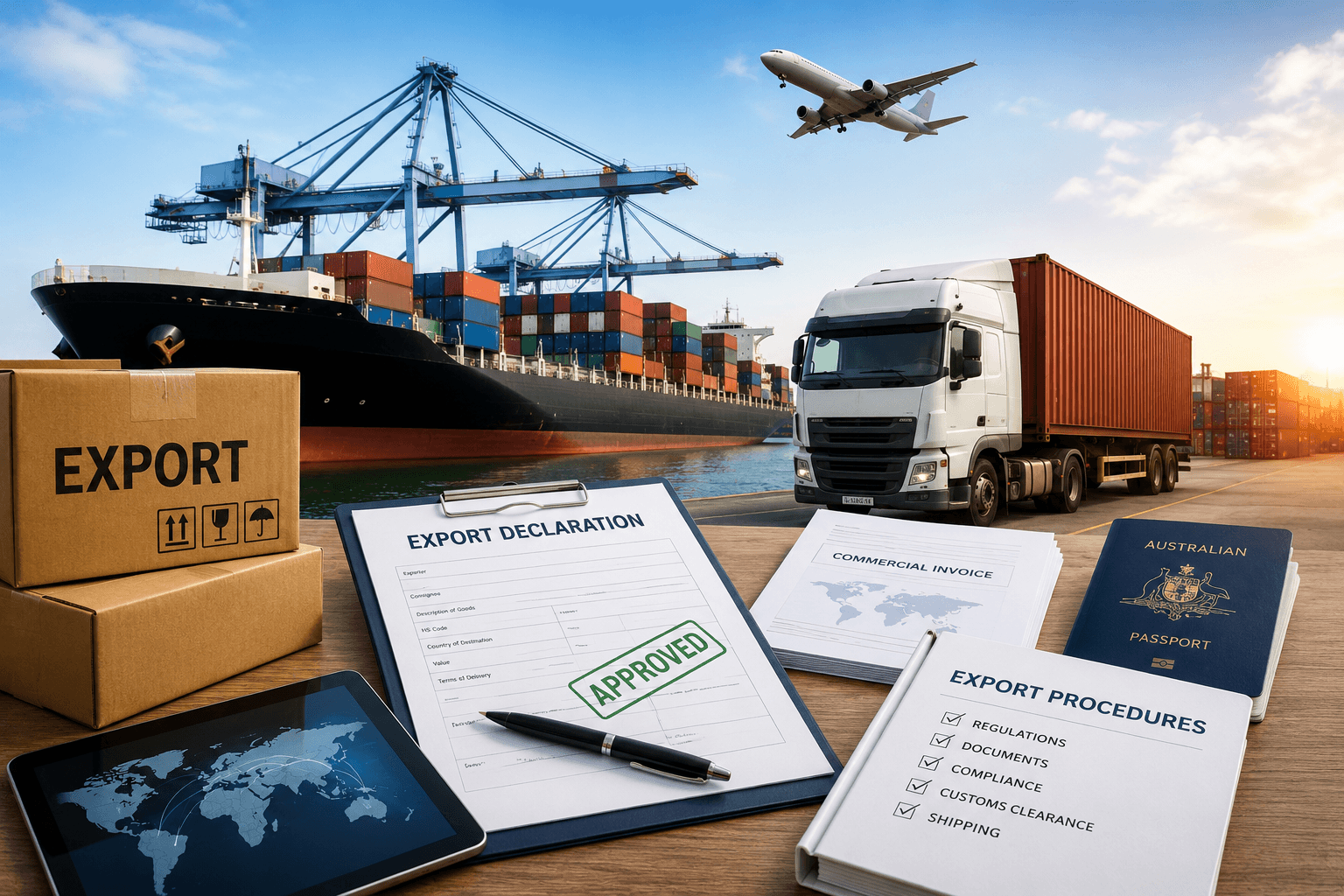
Costs and compliance are the two factors every Australian exporter must understand before a single shipment leaves the country. Whether you are a manufacturer selling into Southeast Asia, a producer shipping agricultural goods to the Middle East, or a small business exploring overseas markets for the first time, getting costs and compliance right from the start determines whether your export operation runs smoothly or runs into expensive delays.
This guide walks you through what Australian exporters need to know, from documentation requirements and regulatory obligations to the real costs involved in moving goods across borders.
Do You Need An Export Licence
Not all goods can leave Australia without permission. Certain categories require an export licence or permit before they can be shipped, and failure to obtain the correct authorisation is a serious costs and compliance issue that can result in penalties, cargo seizure, or loss of export privileges.
Goods that commonly require an export permit include controlled military and dual-use items regulated under the Defence Export Controls framework, certain agricultural commodities managed by bodies such as the Australian Meat and Live-stock Authority and Wheat Exports Australia, wildlife and heritage items regulated under the Environment Protection and Biodiversity Conservation Act, and goods subject to sanctions against particular countries or entities.
The Australian Border Force and the Department of Foreign Affairs and Trade are the primary regulatory bodies overseeing export controls. Before booking freight, confirm with your customs broker whether your product category requires a permit and allow adequate lead time to obtain one.
Export Documentation Checklist
Accurate documentation is at the heart of costs and compliance for any export shipment. Missing or incorrect paperwork causes delays at origin, rejection at the destination port, and additional storage and handling fees that directly affect your costs and compliance budget.
The core documents required for most Australian export shipments include a commercial invoice, a packing list, a bill of lading or airway bill, a certificate of origin, and an export declaration lodged through the Integrated Cargo System. Depending on the destination and the nature of the goods, you may also need a phytosanitary certificate, a fumigation certificate, a dangerous goods declaration, or a certificate of conformity.
Each destination country has its own import requirements, and costs and compliance obligations vary significantly between markets. The European Union, the United States, and many Southeast Asian countries each have distinct labelling, standards, and documentation requirements that must be met before your goods are accepted.
Understanding Export Costs
Managing costs and compliance together is more efficient than treating them separately. The key cost categories for Australian exporters include the following.
Freight costs vary depending on whether you ship by sea or air, the volume and weight of your cargo, the origin and destination ports, and the Incoterm agreed with your buyer. Sea freight from Australia to major trading partners such as China, the United States, and the United Kingdom typically ranges from a few hundred to several thousand dollars per container, while air freight is significantly more expensive per kilogram but faster.
Origin charges cover costs incurred in Australia before the cargo is loaded, including container packing, transport to the port or airport, terminal handling charges, and export documentation fees. These are frequently overlooked when calculating total export costs and compliance budgets, but they can add several hundred dollars to each shipment.
Customs brokerage fees apply when you engage a licensed customs broker to manage your export declaration and ensure costs and compliance with Australian Border Force requirements. These fees are generally modest relative to the value of the shipment and the protection they provide.
Destination charges are costs levied at the receiving port or airport and are the responsibility of either the exporter or the importer depending on the agreed Incoterm. Understanding who bears these costs is a fundamental part of costs and compliance planning for every export transaction.
Incoterms And Who Pays For What
Incoterms define the point at which costs and compliance responsibilities transfer from the exporter to the importer. Choosing the right Incoterm for your transaction protects your business and avoids disputes over who is responsible for freight costs, insurance, and customs clearance at each end of the journey.
The most common Incoterms for Australian exporters are EXW (Ex Works), where the buyer takes responsibility from the seller’s premises; FOB (Free on Board), where the seller is responsible until the goods are loaded onto the vessel; CIF (Cost Insurance and Freight), where the seller covers freight and insurance to the destination port; and DAP (Delivered at Place), where the seller is responsible for delivery to an agreed location in the buyer’s country.
Each option has different costs and compliance implications. A freight forwarder can help you select the Incoterm that best protects your interests and accurately reflects the agreed commercial arrangement with your buyer.
Common Export Compliance Mistakes
Costs and compliance errors are more common than most exporters expect, particularly among businesses new to international trade. The most frequent mistakes include lodging export declarations late or incorrectly, undervaluing goods on the commercial invoice, failing to obtain required permits before shipping, and using an incorrect Harmonised System code that misclassifies the goods.
Misclassification is a particularly costly error because it can trigger inspections, delays, and penalty assessments in the destination country, undermining the commercial relationship you have built with your overseas buyer. Accurate HS code classification is an essential part of costs and compliance for every shipment.
How Synergy Freight Supports Australian Exporters
Synergy Freight Management provides end-to-end export support for Australian businesses, covering everything from export declaration lodgement and documentation preparation to freight booking and delivery coordination.
Our team of licensed customs brokers ensures your costs and compliance obligations are met accurately and on time, so your shipment reaches its destination without unnecessary delays or penalties.
Whether you are exporting for the first time or looking for a more reliable freight partner, Synergy Freight delivers transparent pricing, proactive communication, and the local expertise that Australian exporters need to compete confidently in international markets.
Contact Synergy Freight today to discuss your export requirements or get a freight quote for your next shipment.
Share this article
Azmi El-Ali
Managing Director, Synergy Freight Management
Azmi El-Ali is the Managing Director of Synergy Freight Management. With extensive experience in freight forwarding, customs brokerage, and Australian trade compliance, Azmi helps businesses import and export goods with confidence.
Connect on LinkedIn